CheqOne updates
برنامج طباعة شيكات الإمارات for Finance Teams
Choose برنامج طباعة شيكات الإمارات with accurate bilingual amounts, controlled cheque books, aligned printing, and PDC visibility across every entity.
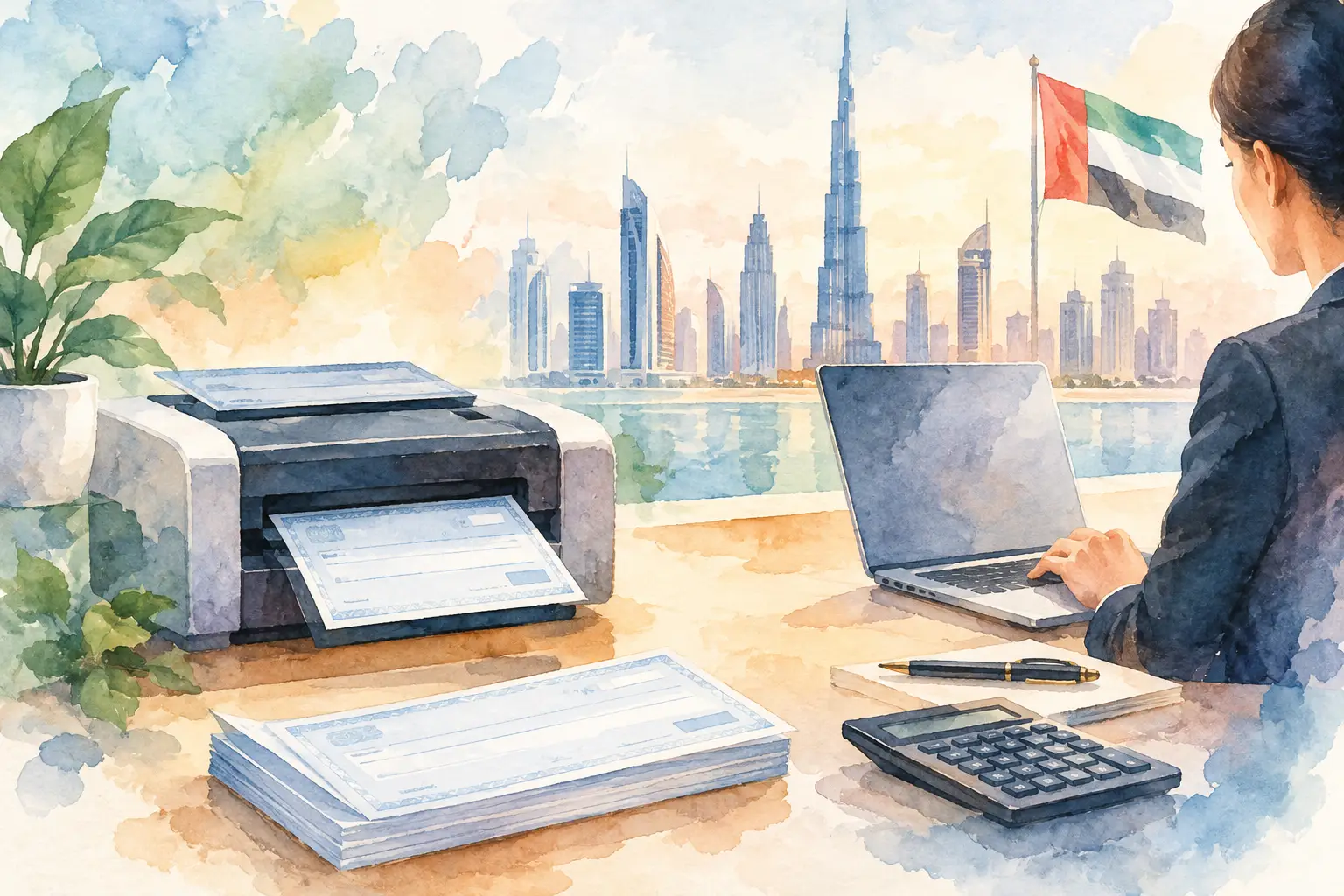
A cheque that prints one line too low, uses the wrong leaf number, or is recorded in a separate spreadsheet is not a minor administrative issue. It creates uncertainty around a payment instrument that affects cash flow, supplier relationships, and financial control. The right برنامج طباعة شيكات الإمارات should do more than place payee and amount fields on paper. It should give finance teams one calm place to create, print, track, and account for every cheque.
For businesses that issue supplier payments, rent cheques, installments, or post-dated cheques, the practical question is not whether to digitize the process. It is whether the system reflects the real workflow of UAE bank cheques, including bilingual amounts, physical cheque books, different bank layouts, and the full payment lifecycle after printing.
What a UAE cheque printing program must control
Cheque printing sits at the intersection of financial data and physical stationery. A useful system needs to protect both. It should identify the company, bank account, cheque book, and next available leaf before a cheque is created. It should also preserve a clear record of who prepared, printed, changed, canceled, or marked the cheque as honored or dishonored.
This matters most in teams with multiple users or entities. A spreadsheet may show a cheque number, but it does not reliably prevent two people from selecting the same leaf. A handwritten register may tell you a cheque was issued, but it rarely shows who changed its status three months later. Desktop software can solve part of the printing problem while leaving access, reporting, and historical visibility fragmented across individual computers.
A cloud-based cheque operations system brings those controls together. Finance users can work from the same register while permissions limit what each person can view, create, approve, or administer. The objective is not to add process for its own sake. It is to make the correct process easier than the risky one.
Printing accuracy is a setup task, not a daily gamble
Every bank cheque format places its fields differently. The date, payee, numeric amount, amount in words, account information, and signature area must land where the bank expects them. Even a dependable printer can shift output based on paper feed, tray selection, print drivers, or printer model.
That is why a good program separates layout configuration from daily cheque entry. Once the finance team selects the correct bank format and calibrates the approved printer, users should be able to print consistently without adjusting margins for every payment. Fine alignment controls matter here. A small movement can be the difference between a clean cheque and a rejected or manually corrected document.
Ready-made layouts reduce setup time for commonly used regional bank formats. A layout designer remains necessary when a company uses a less common cheque design, a custom bank format, or a format that has changed. The right choice depends on the bank account and printer fleet, not on a promise that one template will fit every cheque.
Printer compatibility also deserves practical attention. Many finance offices continue to use laser or inkjet printers, while others rely on dot-matrix devices or dedicated cheque printers. A system should support the equipment that is already approved for the payment process, while providing a controlled print method from designated Windows PCs. This avoids a common gap in browser-based tools: creating a cheque online but losing precision at the final printing step.
Bilingual amounts cannot be an afterthought
Arabic and English amounts in words are a core requirement for many UAE cheque workflows. They should be generated from the numeric value, not typed manually each time. Manual wording introduces avoidable errors, especially for large values, decimals, and payment batches.
The system should produce clear wording in both languages and retain the amount used at the time the cheque was issued. That record becomes valuable when a payment is reviewed later, when a supplier queries a cheque, or when a team compares printed instruments against accounting records.
A cheque register should continue after printing
Printing is only one event in a cheque’s life. The cheque may be delivered to a supplier, held internally, presented, honored, dishonored, canceled, or replaced. Post-dated cheques add another layer because the issue date and expected presentation date may be far apart.
A proper register makes those stages visible as statuses rather than informal notes. This allows the finance team to answer operational questions quickly: Which PDCs are due next month? Which issued cheques have not been delivered? Which cheques were dishonored and require follow-up? Which leaves were canceled and why?
The value is especially clear across multiple companies. Group finance teams often need separate bank accounts and cheque books for each legal entity, but they also need consolidated visibility for planning and oversight. Centralized access can provide both, provided the system preserves entity-level separation and applies role-based permissions carefully.
For example, an accounts payable user may prepare a batch of post-dated rent cheques, while a finance manager reviews the entries and an administrator manages cheque-book setup. Each person sees the information needed for the role, and the audit trail records the actions taken. That is a more dependable model than sharing a spreadsheet or relying on a single desktop login.
Choosing a برنامج طباعة شيكات الإمارات
When evaluating a cheque printing program, start with the workflow already used by your finance team. The best product is not necessarily the one with the longest feature list. It is the one that removes the control gaps your team experiences every week.
Check whether it supports your bank layouts and lets you configure additional formats. Confirm that it can generate Arabic and English amounts correctly. Ask how it manages cheque leaf ranges, voided leaves, and duplicate-number prevention. Review whether printing is supported on the specific Windows computers and printer types your team uses.
Then look beyond the print screen. A system should offer a searchable register, status management, reporting, exports, and permission controls. If you issue PDCs, the ability to create them in batches and monitor upcoming dates may be more valuable than a cosmetic dashboard. If you operate several companies, ensure that users can switch between authorized entities without mixing bank accounts or records.
Data migration is another practical consideration. Most teams do not want to abandon their existing cheque history. Importing prior records helps preserve continuity, particularly for outstanding PDCs, unpresented cheques, and ongoing supplier arrangements. It also means reporting can begin from a useful baseline rather than from the date the new system was activated.
A controlled path from setup to daily use
Adoption should be straightforward enough for a finance team to validate before changing a working process. Start by creating the company profile, adding the bank account and cheque-book range, and assigning access to the relevant users. Next, select or configure the layout and test print alignment on the approved printer PC.
After that, create a small set of sample cheques. Verify dates, payee names, numeric amounts, bilingual wording, and field placement against actual stationery. Once the team is satisfied, move to live entries and use statuses consistently from the first issued cheque onward.
CheqOne is designed around this sequence: configure the operational foundations first, then create and print cheques with the register, controls, and reporting already in place. A no-card trial is useful here because it lets a team test its own bank formats and printers rather than making assumptions from a generic demonstration.
The strongest cheque process does not depend on one careful employee remembering every number, date, and delivery update. It gives the whole finance team a reliable record of what was issued, what happened next, and what payment obligations are still ahead.